
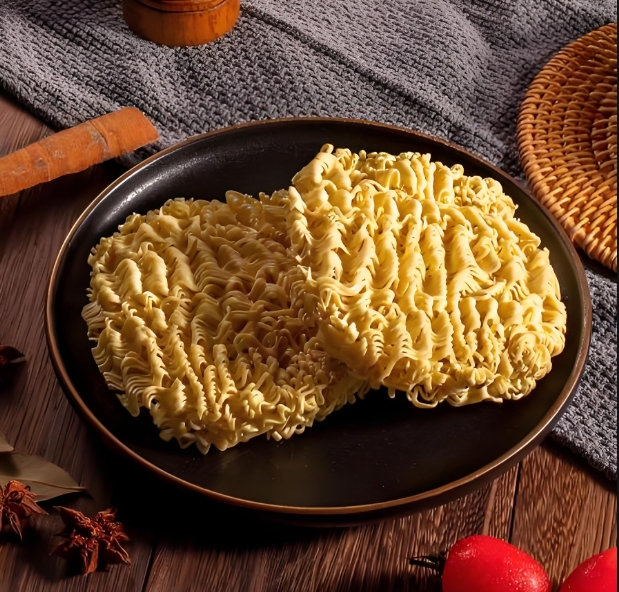
Wie gebratene Instantnudeln in kleinen Mengen hergestellt werden: Eine Schritt-für-Schritt-Anleitung
Fried instant noodles are a popular convenience food worldwide, known for their quick preparation and long shelf life. Small-scale production follows a structured process to ensure quality, texture, and flavor. This article explains how small-batch fried instant noodles are formed, from dough mixing to final frying.
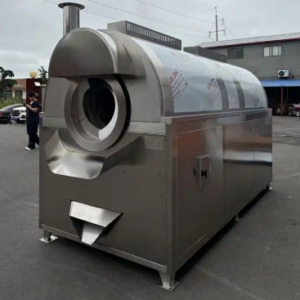
Maschine zur Herstellung von Instant-Nudeln
Umschalten auf1. Ingredients Mixing & Dough Preparation
The process begins with blending key ingredients:
- Weizenmehl (main structural component)
- Wasser (hydration for gluten development)
- Salt & Alkaline agents (e.g., kansui) – improves elasticity and chewiness
- Optionale Zusatzstoffe (starch, gluten, emulsifiers for texture enhancement)
The mixture is kneaded into a smooth, elastic dough.
2. Dough Sheeting & Thickness Reduction
The dough passes through a series of rollers to form thin, uniform sheets:
- First Roller: Creates a thick dough sheet (~10 mm).
- Subsequent Rollers: Gradually reduce thickness (final sheet ~1 mm).
- Dusting with flour prevents sticking.
3. Noodle Strand Formation
The thin dough sheet is slit into noodle strands using a cutting machine with adjustable blades:
- Straight noodles (knife-cut style)
- Wavy noodles (curled for better texture)
- Thickness varies (0.8–1.2 mm, depending on product type)
4. Steaming (Partial Cooking)
The noodle strands pass through a steam tunnel (100°C for 1–3 minutes) to:
- Gelatinize starch for better texture
- Reduce frying time later
- Improve shelf stability
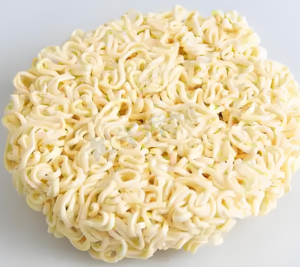
5. Noodle Block Shaping (for Instant Cups/Packets)
For block-style instant noodles:
- Noodles are folded into a mold
- Pressed into a compact shape
- Pre-dried slightly to hold form
For cup noodles:
- Noodles are loosely packed to allow even frying
6. Deep-Frying (Key for Crispiness & Preservation)
The noodles are fried in 170–180°C oil (palm oil, soybean oil, or blended oils) for 60–90 seconds:
- Removes moisture (reducing water activity for shelf stability)
- Creates porous structure (helps rehydration later)
- Adds flavor & crispness
After frying, excess oil is drained via vibration or centrifugation.
7. Cooling & Packaging
- Abgekühlt auf Raumtemperatur to prevent condensation
- Packaged with seasoning sachets (flavor powder, dehydrated veggies, oil)
- Sealed in airtight bags/cups to maintain freshness
8. Quality Control Checks
Small-scale producers ensure:
✔ Oil content (15–20% for optimal crispness)
✔ Feuchtigkeitsgehalt (<10% for shelf stability)
✔ Texture & rehydration time (should soften in 3–5 minutes in hot water)
Schlussfolgerung
Small-scale fried instant noodle production involves precise dough preparation, shaping, steaming, and frying to achieve the desired texture and shelf life. While the process is similar to large-scale manufacturing, small producers often focus on artisanal flavors and quality control.
Would you like details on seasoning formulations or alternative (non-fried) noodle production methods?




 German
  English
  Russian
  Arabic
  Spanish
  Italian
  Portuguese
  French