
Flavoring Techniques for Small-Scale Instant Noodle Production Lines
Achieving consistent, delicious, and stable flavor is one of the most critical aspects of instant noodle production. For small-scale operations, this process requires careful planning, precise execution, and rigorous quality control. This article outlines the primary methods and best practices for flavoring noodles on a smaller production line.
The three main stages of flavoring are: 1) Noodle Seasoning, 2) Powder Seasoning Pack, and 3) Liquid Seasoning Pack.
1. Noodle Seasoning (Base Flavoring)
This is the first and most fundamental step, where flavor is incorporated directly into the noodle strands themselves. It ensures that the noodle cake has a pleasant taste even without the seasoning packets.
- Method:
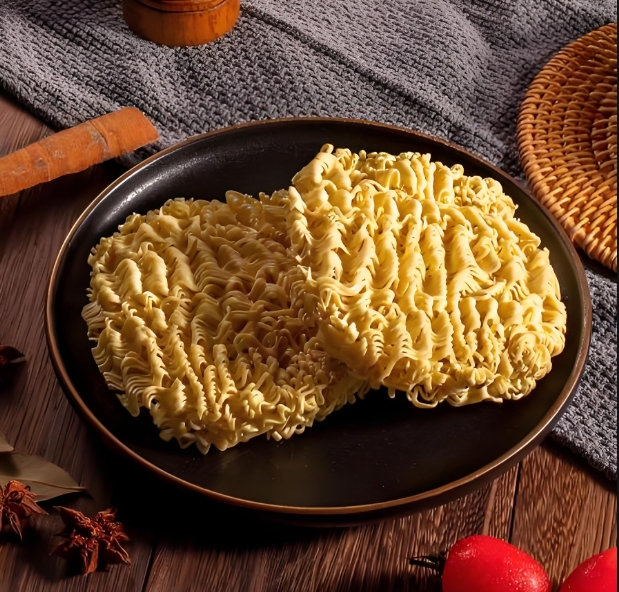
- The most common and effective method is Spraying during the cooling stage. After the noodles exit the fryer or dryer, they pass through a cooling tunnel. Here, a fine mist of a liquid seasoning blend is evenly sprayed onto the hot noodles.
- Why it works: The residual heat and porous structure of the fried noodles allow them to instantly absorb the liquid, carrying the flavor into the core of the noodle strand.
- Typical Liquid Seasoning Blend:
- Soy Sauce: Provides a savory umami base and color.
- Salt: Enhances overall saltiness.
- Sugar: Balances saltiness and adds a slight sweetness.
- Yeast Extract: A natural source of umami, often used as a MSG alternative.
- Water: Acts as a carrier to dilute the mixture for even spraying.
- Potato Starch (optional): A small amount can be added to help the seasoning adhere to the noodles, creating a slight glaze.
- Key Consideration for Small Lines: Consistency of the spray is paramount. Invest in a good quality spray system with nozzles that do not clog. The flow rate must be calibrated to ensure each noodle cake receives an identical amount of seasoning.
2. Powder Seasoning Pack
This is the heart of the flavor delivery system, providing the dominant taste of the broth.
- Formulation: The powder is a dry blend of many ingredients. A basic formula includes:
- Salt: The primary carrier and flavor base.
- Flavor Powders: e.g., Chicken powder, beef powder, shrimp powder, mushroom powder.
- MSG and Nucleotides (I+G): Essential for enhancing and rounding out the savory umami taste.
- Sugar & Dextrose: For sweetness and balance.
- Spices: Garlic powder, onion powder, white pepper, chili powder.
- Maltodextrin: A neutral-flavored bulking agent that adds body to the powder and helps other flavors adhere.
- Anti-Caking Agents: (e.g., Silicon Dioxide) – Crucial for preventing the powder from clumping due to humidity, which would clog dispensing equipment.
- Mixing Process:
- Weighing: Precisely weigh each ingredient according to the recipe formula.
- Pre-Mixing: Combine minor ingredients (like spices) with a larger ingredient (like salt or maltodextrin) to ensure even distribution before adding them to the main batch.
- Main Mixing: Use an industrial tumbler or ribbon blender. Mixing time is critical—too short causes unevenness, too long can cause the ingredients to separate by density.
- Sifting: After mixing, the powder is often passed through a sieve to break up any lumps and ensure a perfectly consistent, fine texture.
- Dispensing: For small lines, semi-automatic auger filler machines are ideal. They dispense a precise weight of powder into each packet. The machine must be calibrated regularly to ensure weight accuracy.
3. Liquid Seasoning Pack
This pack adds richness, a mouthfeel of oil, and carries fat-soluble flavors that the powder cannot.
- Formulation:
- Base Oil: Typically refined, deodorized palm oil or soybean oil for its neutral taste and stability.
- Flavor Oils: These are critical. They are created by heat infusion – heating the base oil and steeping it with aromatic ingredients like garlic, onion, scallion, chili, or spices. The oil captures their volatile aromas.
- Animal Fat: Rendered chicken fat or beef tallow is used for authentic meaty flavors.
- Antioxidants: Such as TBHQ or Vitamin E, are added to prevent the oil from becoming rancid and extending the product’s shelf life.
- Process:
- Heating & Infusion: The base oil is gently heated. Aromatics are added and simmered at a controlled temperature to extract flavor without burning.
- Filtration: The oil is then filtered to remove all solid particles, leaving a clear, flavored oil.
- Cooling and Addition: The oil is cooled before adding heat-sensitive antioxidants.
- Dispensing: Using a piston filler or peristaltic pump, a precise small volume (typically 2-4 ml) is dispensed into small laminated foil packets. The sealing of these packets must be perfect to prevent leakage.
Best Practices for Small-Scale Success
- Recipe Standardization (SOPs): Document every formula and process step precisely. The exact weight of every ingredient, mixing time, and spraying parameters must be fixed as a Standard Operating Procedure.
- Quality Control of Raw Materials: Consistently great flavor starts with consistently high-quality ingredients. Source powders and oils from reliable suppliers and test each batch upon arrival.
- Prevent Cross-Contamination: Thoroughly clean all equipment (mixers, blenders, pipes, nozzles) when switching between different flavors. Residual shrimp powder can easily ruin a batch of vegetable noodles.
- Sensory Evaluation: Implement a daily tasting panel. Cook samples from the production line and critically evaluate the flavor, saltiness, aroma, and mouthfeel against a predefined standard.
- Humidity Control: Control humidity in the production area, especially where the powder is mixed and packed. Humidity is the enemy of powder flow and can lead to clumping.
Conclusion
For a small-scale instant noodle producer, mastering the art and science of flavoring is what creates a loyal customer base. By meticulously managing the three-stage process of noodle seasoning, powder packs, and liquid packs, and adhering to strict quality control protocols, a small operation can produce instant noodles with flavor profiles that rival those of large corporations, carving out a successful niche in the market.




 English
  Russian
  Arabic
  Spanish
  Italian
  Portuguese
  French
  German